Events - 13.03.2026 - 10:00
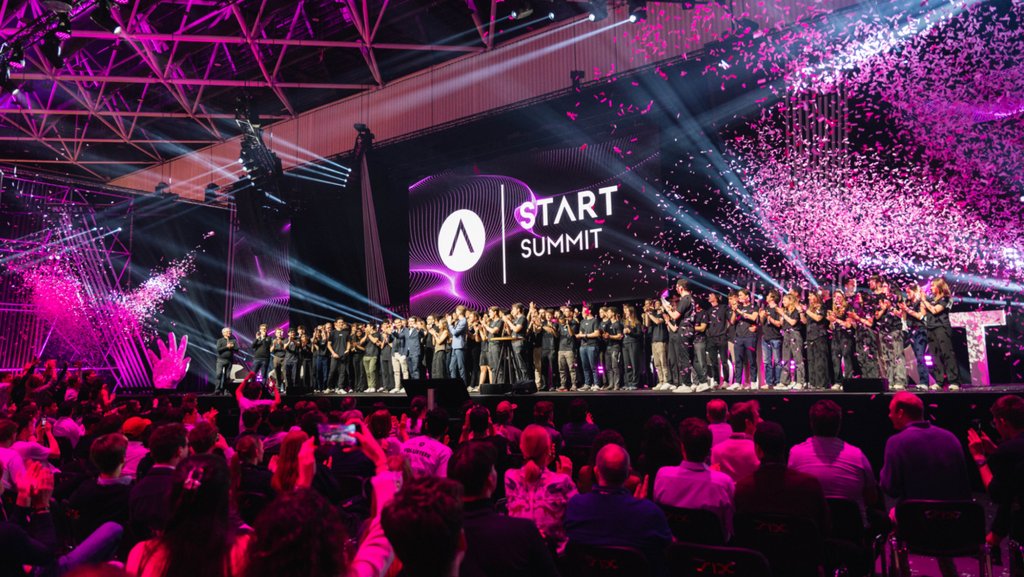
The conference is being organised by students at the University of St.Gallen and will bring more than 7,000 founders, investors, company representatives and young talents from over 30 countries to the Olma exhibition centre. In line with the motto “Embrace New Horizons”, the summit will focus on innovations beyond the current AI boom. Discussions will cover developments in areas such as deep tech, robotics and data-driven technologies, as well as the question of what role European start-up ecosystems can play in global competition in the future. At the same time, the summit will address practical challenges for founders – from early-stage financing to international scaling.
Speakers will include Péter Fankhauser (ANYbotics), Dr. Robert Fink (Helsing), Martin Kubie (Proxima Fusion), Milda Mitkutė (Vinted), Simon Michel (Ypsomed), Felix Ohswald (GoStudent), Verena Pausder (German Startup Association) and Helmut Schönenberger (UnternehmerTUM).
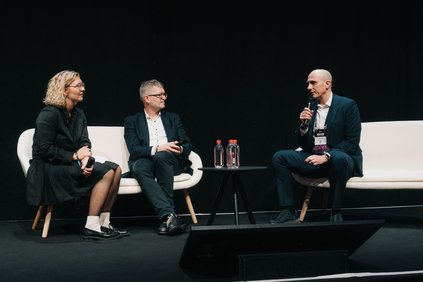
One focus of this year's START Summit is expertise from the Alpine region. With its own “Alpine Area”, the conference aims to highlight the innovative strength of the region between Lausanne, Zurich, St.Gallen and Munich. Universities such as EPFL, ETH Zurich, the University of St.Gallen and the Technical University of Munich are shaping a growing tech ecosystem there. This role of universities is also the focus of the panel discussion “Ivy Who? – Why the Alps Quietly Outcompete”. HSG expert Dietmar Grichnik and Helmut Schönenberger (UnternehmerTUM) will discuss with Manager Magazin editor Sarah Heuberger how universities can promote entrepreneurship and translate scientific research into successful start-ups. The “St.Gallen Area” at the START Summit serves as a meeting place for regional start-ups. The HSG START Accelerator counteracts the exodus of successful start-ups from Eastern Switzerland by strengthening early-stage deep tech teams and anchoring them in the region. With the new digital start-up service “Startupguide”, founders can also set up companies in St.Gallen more easily and with legal certainty.
The START Summit is also a platform for the entrepreneurial environment at the University of St.Gallen. According to the HSG Entrepreneurship Monitor, a total of 845 start-ups emerged from the University between 2014 and 2024. “This makes HSG one of the most active start-up universities in the German-speaking world, ranking directly behind the Technical University of Munich and ETH Zurich,” says Dietmar Grichnik, professor of Entrepreneurship and vice-president for Innovation and Quality at the University of St.Gallen.
Several HSG-related start-ups will be represented at the summit, including fortyfour, ZoneIn, Maeva, Brian, Reltix and CorpIn. This presence will be complemented by companies such as Swisslog Tunnel, where HSG alumnus Manuel Richarz is VP of Business.
For many young companies, the START Summit serves as a springboard and international stage. In 2024, for example, the start-up Tether EV won the Summiteer Pitching Competition and received prize money of CHF 10,000. In the months that followed, several innovation awards and a pre-seed financing round of USD 1.5 million followed. Swiss deep tech start-up BTRY also presented its technology to investors and industry partners at the summit. Since then, the company has completed a seed financing round worth USD 5.7 million, was voted 7th in the Top 100 Swiss Startups 2025 and launched a particularly thin solid-state battery for smart cards.
The two-day conference programme includes panels, keynotes and workshops, as well as several pitching competitions with prize money totalling over CHF 100,000. Another item on the programme is the START Hack, a 36-hour hackathon in which students and young talents develop prototypes for real challenges from industry and research. NVIDIA will also be represented at the start of the START Hack. The jury includes HSG computer science professor Barbara Weber, among others. "Through the START Summit, we offer young founders a platform for a strong network, expertise and exchange. Our formats are designed to inspire and empower guests to confidently ride the next wave of technological developments,” says HSG student Maya Sangtani, a member of the START Global conference organisation team. “Many European start-ups face the challenge of finding enough start-up capital to grow. We address this in various discussion formats at the conference,” adds Sangtani.
More articles from the same category
This could also be of interest to you
Discover our special topics