Research - 09.12.2025 - 12:07
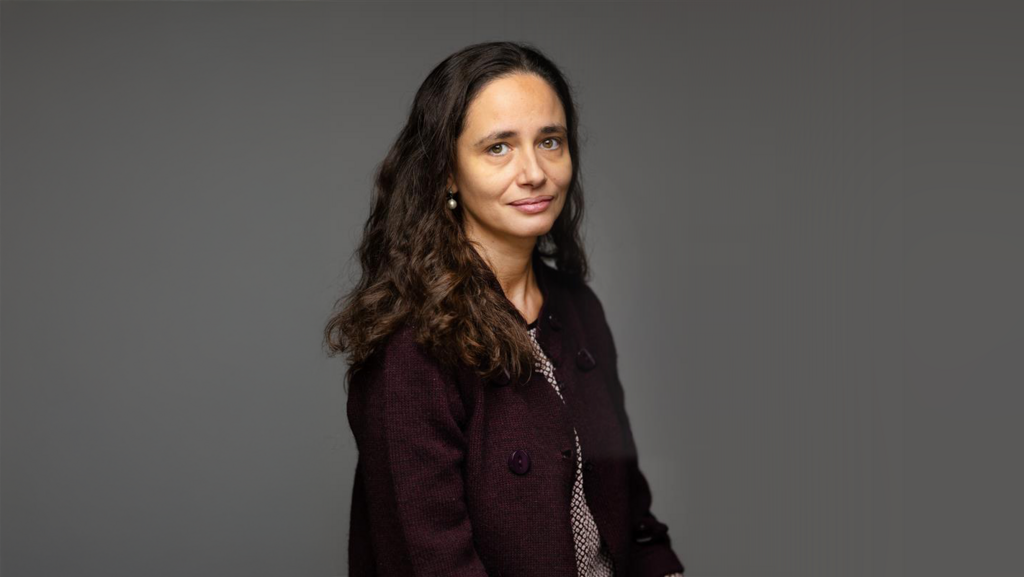
Awarded with the European Research Council’s (ERC) prestigious Consolidator Grant, Dr Marta Domínguez Díaz at the University of St.Gallen (HSG) embarks on a new project focused on the relations between Muslims and Jews in the Maghrib across time.
Domínguez Díaz’s project, titled “Muslim-Jewish Bridges: The Endurance of Iberian Heritage in the Modern Maghrib (late 17th–late 20th Centuries)”, is expected to begin in 2026 and will run for five years. A multidisciplinary team of historians and anthropologists will work with multilingual sources and communities (Arabic, Hebrew, Judeo-Arabic, Judeo-Spanish, Turkish, Spanish, Catalan, French, English, and Italian), conducting archival research and interviews with remaining community members across Tunisia, Algeria, Morocco, Israel, Argentina, France, Spain, and several other European and Middle Eastern countries.
The project focuses on the intertwined histories of two of North Africa’s most significant minorities, both groups expelled from the Iberian Peninsula at different historical times: the Andalusians, Muslims of Iberian origin that mostly settled in the Maghrib in the early modern period, and the Sephardic Jews, who were expelled from Iberia mainly in medieval times. The project explores their interactions from the moment of settlement in the Maghrib to the time of large-scale departure of Jewish communities from the region in the 20th century.
The study will look at their shared social worlds, uncovering forms of conflict and coexistence. Seeing these groups as an integral part of the wider social fabric, it will also explore the role of other social and political actors in the shaping of these relations, from regional and imperial powers to colonial and postcolonial governments.
The relations between these groups have had a major impact on the societies of the Maghrib, and on Muslim-Jewish relations across the world that can be seen even today.
Domínguez Díaz has been studying the communities of Andalusians in the Maghrib since 2013. By studying these communities, she noticed that they seem to have had historically closer relations with Sephardic Jews than with other groups. Although these relations were not always amicable, she wanted to understand what made these two groups to consistently gravitate to one another. Having recently had the privilege of gaining access to numerous, largely underexplored private and state-owned collections of archives has opened a fascinating opportunity for her to undertake this research.
She believes that their research will show that the social relations between the groups were complex but hopes to find instances of sincere camaraderie and connection, and that, as important as religion is in determining social behaviour, other questions such as class and gender, may also have play a role as important in the configuration of these social worlds.
Dr Marta Domínguez Díaz uses an anthropological approach to the study of minority populations primarily in North Africa and Western Europe, and is the author of the recently released Tunisia’s Andalusians: The Cultural Identity of a North African Minority.
More articles from the same category
Discover our special topics