Campus - 05.03.2026 - 09:00
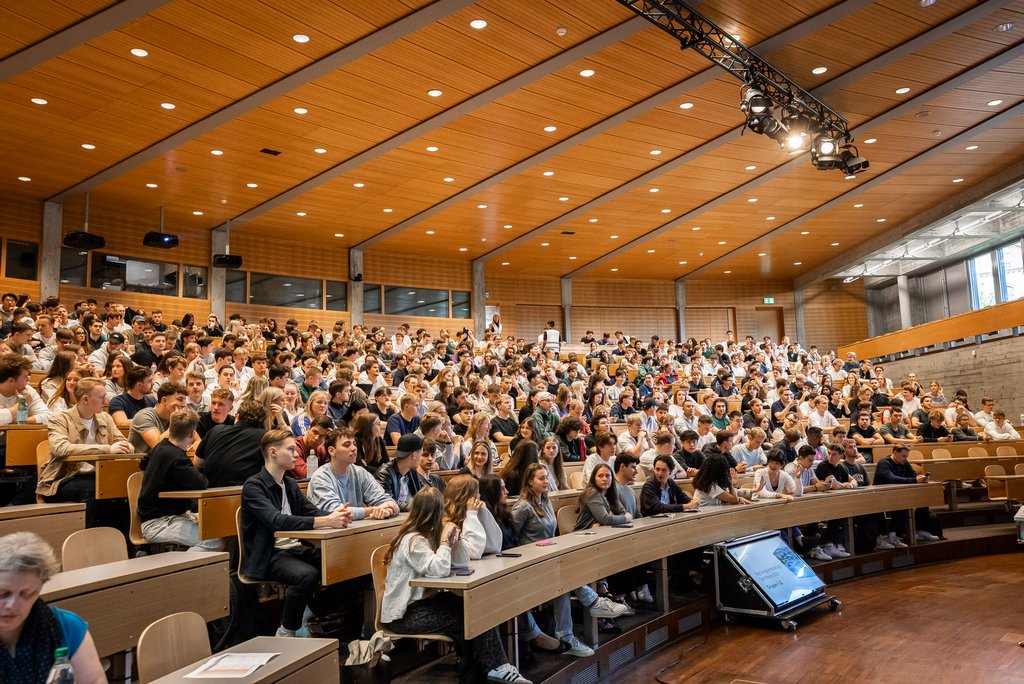
HSG's assessment year is renowned beyond the university: the first year of study is considered demanding and competitive. Now, the assessment year is undergoing a gentle update. At the heart of the renewal: from the autumn semester of 2026, all students will be taught political science. One focus of the course will be climate policy.
‘The integration of political science strengthens interdisciplinary teaching at the beginning of the HSG programme. At the same time, climate policy addresses a current and urgent topic,’ says René Schegg, HSG's head of programme development. In addition to the new course, the first year of study traditionally includes business administration, economics and law. In addition, there are cultural and social sciences as well as foreign languages.
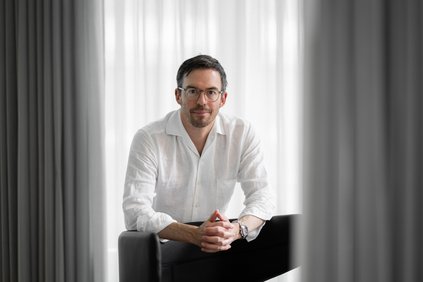
The introduction to political science focuses on climate policy. ‘Climate policy is particularly well suited as an illustrative example,’ says Klaus Dingwerth, HSG professor of political science, who will lead the course together with Adrian Rinscheid, HSG professor of climate policy & decision making. ‘It affects local, national and international levels, various political institutions and different theoretical perspectives.’
Dingwerth: ‘Climate change is also a challenge that affects the economy, the state and society in equal measure.’ Many countries, including Switzerland, are aiming for climate neutrality by 2050. 'The current generation of students therefore faces major tasks and changes in their professional lives. A basic understanding of climate policy is essential for them.‘
The aim of the course is not only to impart knowledge about climate policy, but also to stimulate students' political science thinking. They should be given an analytical ’toolbox' with which they can classify political phenomena. This includes key concepts and theories as well as questions such as what distinguishes politics from law and economics.
The course also addresses extra-parliamentary forms of politics and different political systems, with a focus on democratic orders. ‘Democracies are under pressure worldwide. This is another reason why it is important to understand how they work,’ says Dingwerth.
In addition, students work on reflection tasks. These could, for example, deal with the question of how the interests of future generations can be better represented in climate policy. In this way, the course combines technical fundamentals with current social debates.
Dingwerth welcomes HSG's clear commitment to sustainability. ‘The fact that all new students, regardless of their future field of study, receive an introduction to political science with a focus on climate policy is an important signal.’
With this expansion, the first year of study at HSG provides an even broader basic education. After this one-year orientation, students can also deepen their newly discovered interests: after the introductory year, students can choose flexibly between economics, law and international affairs. In addition, a voluntary course on self-competence and self-organisation will be offered to assessment students from autumn 2026. In this course, they will learn, among other things, about tools for work planning and personal development.
More articles from the same category
Discover our special topics