Research - 09.02.2026 - 10:00
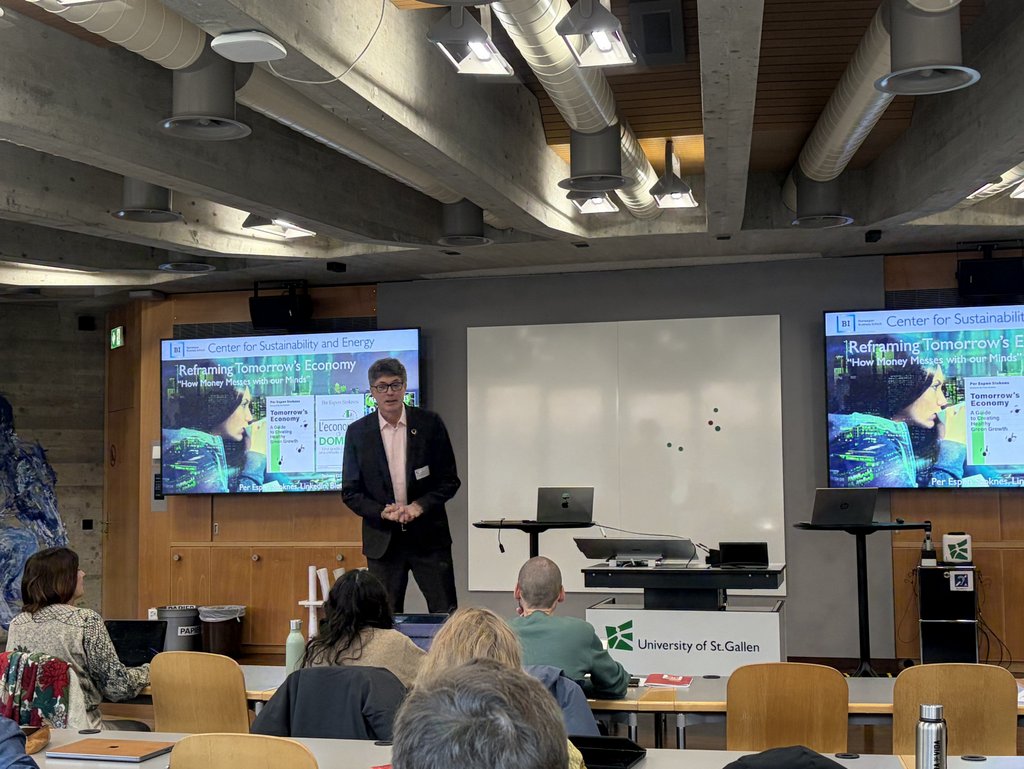
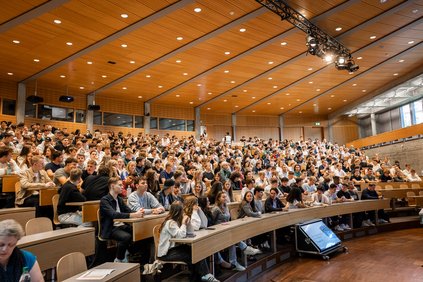
HSG hosted a conference that examined the role of banks in the energy transition. Organised by Prof. Dr. Roy Gava and Prof. Dr. Adrian Rinscheid, the event was an also the official kick-off to their most recent project “climateB”, which will investigate how the financial sector responds to sustainability demands from different stakeholders.
To set the tone of the event, Per Espen Stoknes was brought in for a fresh perspective for the conference’s Spotlight lecture. Dr. Stoknes is an associate professor and co-director of the Center for Sustainability and Energy at BI Norwegian Business School. He tackles sustainability finance in a unique manner. With a background as a clinical psychologist who also studied Jungian psychology in Zurich, Stoknes also has his Ph.D in green economics.
Communicating to citizens is also something he excels at. His TED Talk in New York has been viewed 3.4 million times. When talking about sustainability and Climate Change, Stoknes noted that whether it’s business or it’s on a personal level, most of us do not see our actions as being responsible for any negative effects on the environment.
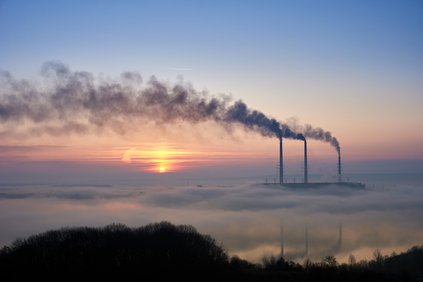
He also noted that banks are still allocating more money into fossil fuels investment into sustainable energy, which shows a misalignment with Paris climate goals.
We have all heard the doomsday scenarios that accompany most talk about climate change. Stoknes calls this “doom overuse and apocalypse fatigue.” Therefore, framing the argument and utilizing emotions in these arguments become vital. He also noted that we need to see whether we are making real impact, and this requires rethinking.
But asking what can be done to communicate this better to the broader public, Stoknes outlines simple but effective strategies that frame the argument differently:
Focus on risk and safety. Show how action or a lack of action will have an influence on our daily lives. Demonstrating a “better safe than sorry” approach can tap into emotions and therefore our attention to dealing with risk.
Focus on a positive narrative of opportunity and upgrades. Discussions should not be try to give people a guilty conscience, but for example, should be about investing in smarter and better use of resources.
Focus on health and inclusion. Demonstrate the unfair and unhealthy effects of not transitioning to green technologies have. Unclean water. Polluted air. Increasing health care costs. Lower life expectancies.
Stoknes finally noted that if we can shift the framings from doom and degrowth to framings around safety, opportunity and health, we can broaden the public and political support for required regulatory shifts to accelerate finance in a more sustainable direction.
More articles from the same category
This could also be of interest to you
Discover our special topics